When siblings keep taking each other's things
Sharing, ownership, boundaries and getting adult help are different skills. Children need to practise each one separately, not just be told to share.
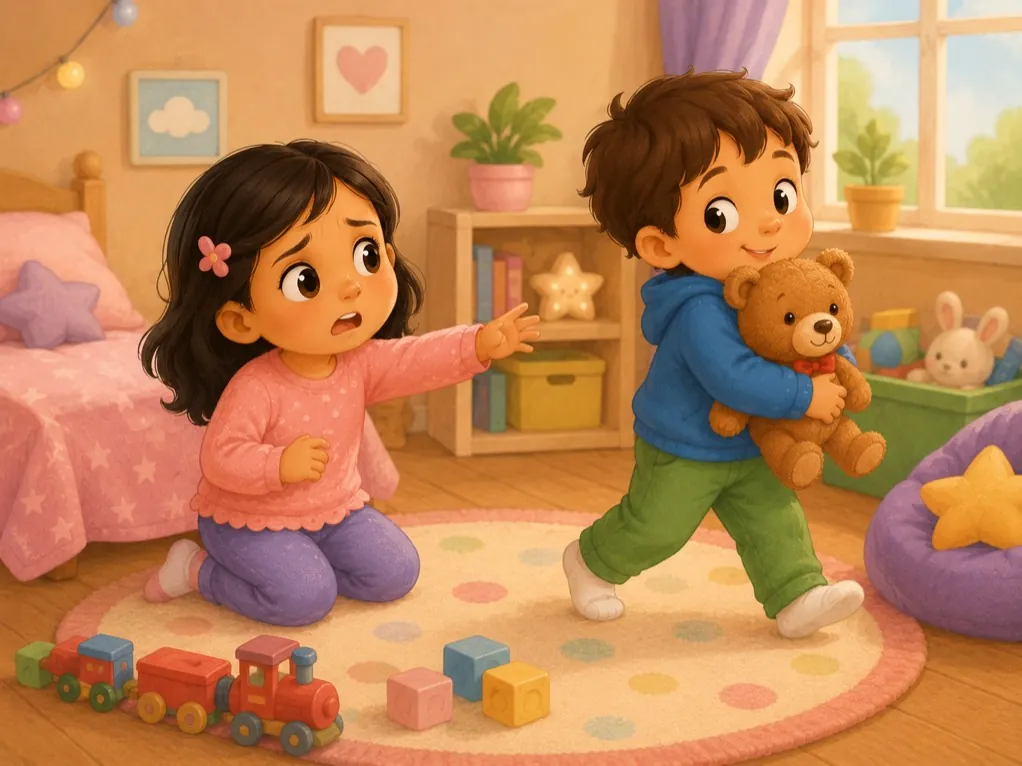
"Just share" isn't really one skill; it's several: knowing what's yours, saying so clearly, taking turns, and knowing when to ask an adult for help. When one sibling keeps taking the other's things, it usually means one of those pieces hasn't been practised yet, not that your child is being unkind. Teach a short boundary sentence for the child whose things are taken, a short waiting sentence for the child who wants a turn, and be clear that asking a grown-up for help is a completely reasonable thing to do, not a last resort or a way of "telling on" someone.
Why "just share" isn't always enough
"Share nicely" bundles together several separate skills: recognising ownership, tolerating someone else having a turn first, putting a boundary into words instead of grabbing, and judging when a situation needs an adult. A young child can be missing just one of those pieces and the whole interaction breaks down, not because they're selfish, but because nobody's handed them the specific words yet.
This is often sharper between siblings than with friends, because siblings share a room, a toy box and your attention every day, not just an occasional playdate. A fight over a toy is sometimes really a child testing what belongs to them and what doesn't, in a house where almost everything is shared.
It also matters that "tell a grown-up" isn't treated as the weak option. A child who comes to find you after trying their own words first has done something genuinely hard and sensible: that's a skill worth noticing out loud, not brushing off.
A boundary sentence for the child whose things were taken
Give the child whose belongings were taken something short and ready to say, rather than expecting them to invent it mid-frustration. Practise these when everyone is calm, so they're already familiar by the time they're needed.
"I'm using that."
"Please give it back."
"You can have it when I'm finished."
"Can we take turns?"
These sentences work because they're plain and non-accusatory. They state the fact and the boundary without needing to also win an argument about who's right.
What the other child can practise
The sibling who wants a turn needs their own short sentence too: asking is a skill just as much as boundary-setting is, and it's easy to forget to teach it separately.
"Can I use it when you're done?"
Practise this alongside the waiting that comes after asking. Being told "when I'm finished" and then actually waiting is its own hard skill, and it deserves genuine praise when it happens, not just when the toy finally changes hands.
When an adult should step in
Encourage children to try their own words first, but be clear that some situations call for a grown-up straight away, and that asking for help then is the right call, not a failure to sort it out themselves.
- Someone may get hurt.
- The child has tried their words and is being ignored.
- The conflict is escalating rather than settling.
- The child feels unsafe.
Try saying: "You tried your words and it didn't work; coming to find me was exactly right."
What parents can model
How you step in teaches as much as what you say. A few habits make it easier for children to trust the process rather than dread it.
- Describe rather than accuse. "This truck is in both your hands" lands very differently from "Why did you grab that?"; it states what's happening without assigning blame before you know the full picture.
- Help children state what happened. Ask each child, in turn, to say briefly what they wanted or what happened, rather than deciding for them.
- Help them work out repair afterwards. Once things are calm, ask what could put things right: an apology, a turn now, a turn later, and let them arrive at it rather than assigning the fix yourself.
Try this 5-minute scenario
When things are calm, ask: "Your brother or sister takes something from your room without asking. What could you do?"
Once they've answered, follow up with: "What could you try first?" and then "When might you need a grown-up?" Let them arrive at their own answers before you add anything of your own.
Try the Growing Wise 5-minute activity
What if this keeps happening?
Ongoing squabbles between siblings and friends are a normal, if tiring, part of growing up alongside other children, and they usually settle down as communication, patience and independent play develop.
If conflict is frequently physical, consistently one-sided, or your child seems frightened rather than simply frustrated, it's worth talking to your GP, health visitor or school. They can help you think through what extra support might be useful.
A Growing Wise story about sharing
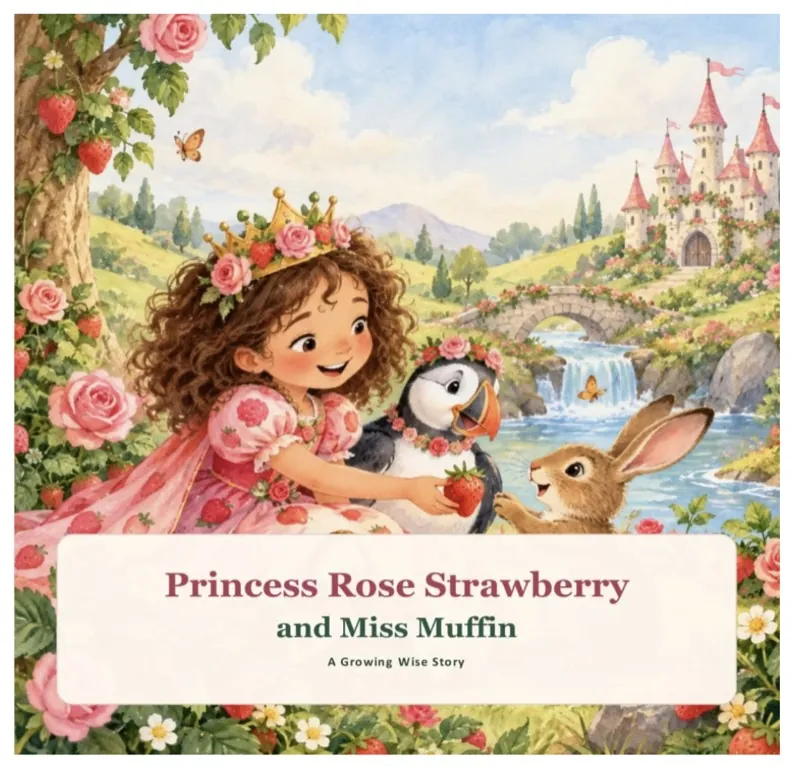
Princess Rose Strawberry and Miss Muffin
In the story, Miss Muffin the puffin finally shares her treats with Pip. It is a gentle way in to the same conversation this page is about: sharing that happens because a child decides to, rather than because they were told to.
Reading it together gives you something to point back to later. “Do you remember how Miss Muffin felt before she shared?” is often easier to ask than a question about the argument that just happened.
Optional resource: a book for safer conflict behaviour
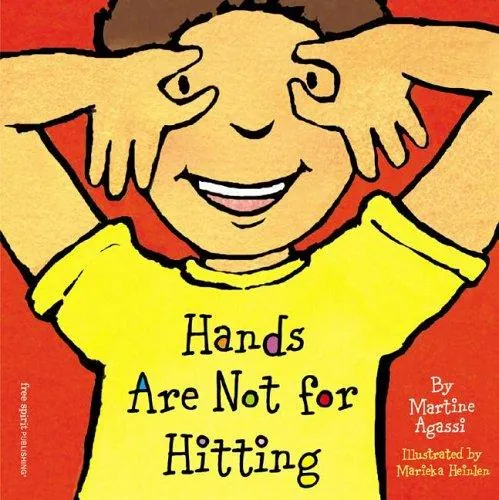
Hands Are Not for Hitting (Martine Agassi)
Useful if a conflict has involved hitting and you want a gentle way to talk about what hands can do instead, not necessary for everyday sharing squabbles.
If sibling conflict is a recurring pattern in your house rather than an occasional squabble, Siblings Without Rivalry is a useful book written for parents, to go alongside this guide.
Want to practise this through stories?
We've collected some books that can make sharing, joining in and everyday friendship conflict easier to talk about. Friendship & sharing books →
Sources & further reading
- NSPCC: Anger management in children: how parents can help
- NSPCC: Safe and happy sibling bedroom sharing
Free pack for friendship and sharing
Scenario cards for joining in and for putting things right after an accident, three 5-minute activities and 12 phrases for tricky moments. Printable, for ages 4–7. Download it straight away.
Free. We’ll email you now and then with new activities. Unsubscribe anytime.
By the Growing Wise team · Last reviewed: 5 September 2026
Growing Wise offers educational ideas for parents and carers. It is not a substitute for professional medical, developmental or mental-health advice.