About Growing Wise
Little stories. Big life skills. Growing Wise helps parents of children aged roughly 4 to 8 turn ordinary difficult moments into small opportunities to practise useful life skills.
Maybe your child finds losing really hard. Perhaps friendship has become complicated, a change of plan has thrown the day off, or they keep saying, “I can't do it.”
Growing Wise gives you somewhere practical to start. You'll find thoughtfully chosen children's books, simple parent guides and short activities for everyday situations involving big feelings, friendship, confidence, disappointment, decision-making, communication and change.
The aim is not to teach children one perfect response. It is to give them more ideas for what they could try when similar situations happen in real life.
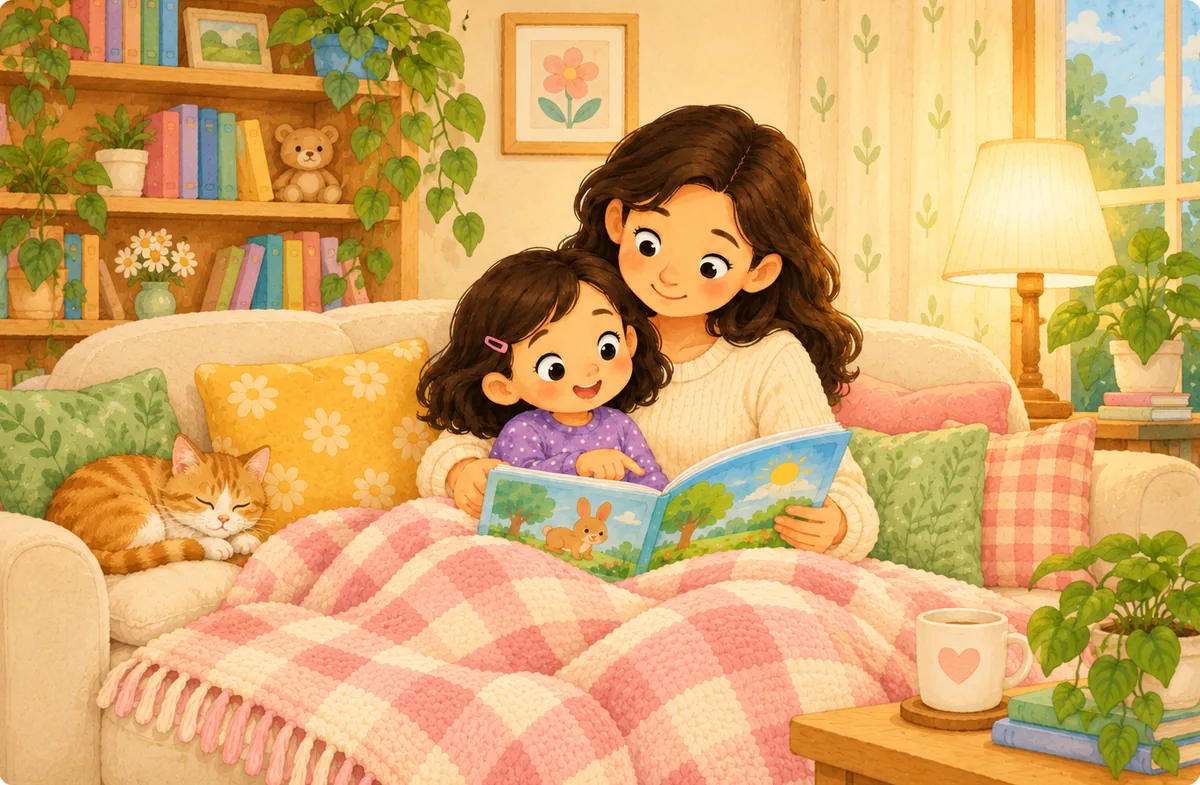
Why I created Growing Wise
I'm Apoorva Saxena, a mum, software engineer and former teacher.
Growing Wise started from something I kept noticing as a parent. Many of the skills we expect young children to have, such as sharing, handling disappointment, making choices, asking for help, coping with change and talking about feelings, are often taught at the hardest possible moment, when everyone is already tired, frustrated or upset.
I wanted a calmer way to explore those situations before they happen.
Teaching made me interested in how children learn through stories, examples, questions and repetition. Becoming a parent made those questions much more real. Growing Wise brings those ideas together in practical resources that families can use in everyday life.
Start with what is happening right now
You don't need to work through Growing Wise in order. Start with the situation that is happening in your family. You might find:
- A book that gives you a natural way to talk about the situation.
- A short activity that lets your child explore what they might do while everyone is calm.
- A parent guide with practical ideas and words you can try.
When we recommend a book, we try to explain who it may be useful for, why we chose it, and what you might talk about afterwards. So instead of searching through dozens of books, you can start with the situation your child is actually dealing with.
Why stories and scenarios?
Sometimes it is easier for a child to talk about what a character could do than to talk directly about something that happened to them. A story or short scenario creates a little distance, so children can think about questions such as:
- “What could they do?”
- “What might happen next?”
- “How might the other person feel?”
- “Is there another option?”
There doesn't always need to be one right answer. A child can change their mind, say they don't know, ask a grown-up for help or decide they don't want to carry on. The goal is simply to give them more options to draw on when real situations happen.
A small independent project
Growing Wise is built by me as an independent project, not by a large company or a clinical team.
I keep improving it by asking one question: is this genuinely useful when a parent thinks, “How do I help my child with this?” That means adding more everyday situations, improving the book recommendations and listening to what parents and children actually find helpful.
Growing Wise is free to use. If it has been useful and you would like to support it, you can support it here. There is never any need to.
Not sure where to start?
Find something that may help →
Try a free Growing Wise activity
If you have a question or suggestion, you're very welcome to get in touch.
Growing Wise is an educational resource for parents and children. It is not medical, psychological or therapeutic advice.