Board games that build life skills
15 games for ages 3 to 8, each chosen for one everyday skill it lets children practise at the table: losing well, waiting, taking turns and asking good questions.
Play when everyone is calm, and keep the first games short. Say out loud how you feel when you lose (“I'm disappointed, but that was fun”), so your child hears what a good loser sounds like. Each game has a line to try saying while you play.
Cooperative games for children who hate losing Patience when the tower falls Taking turns, and winning or losing kindly Talking, asking and everyday skills
Cooperative games for children who hate losing
Everyone plays as one team against the game, so there's no single loser. A gentle place to start if losing ends in tears.
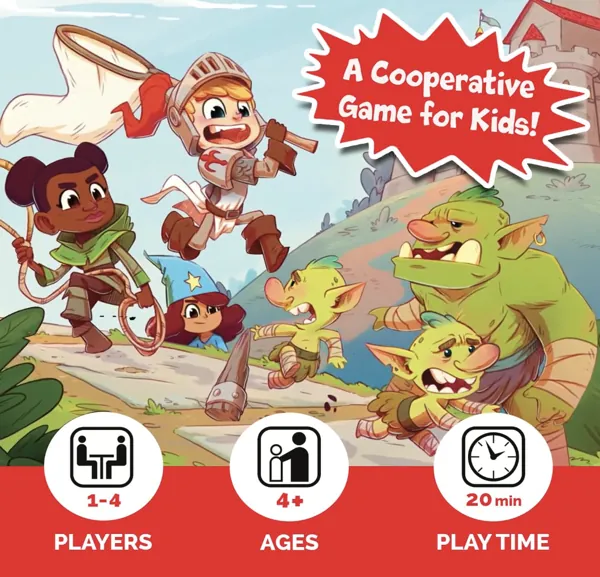
My First Castle Panic (Fireside Games)
- Best for
- Cooperative play with no reading required
- Why we chose it
- Fully cooperative, no reading needed, and built around matching, turn-taking and asking for help rather than beating another player.
- Try saying
- “What did someone else do that helped the team?”
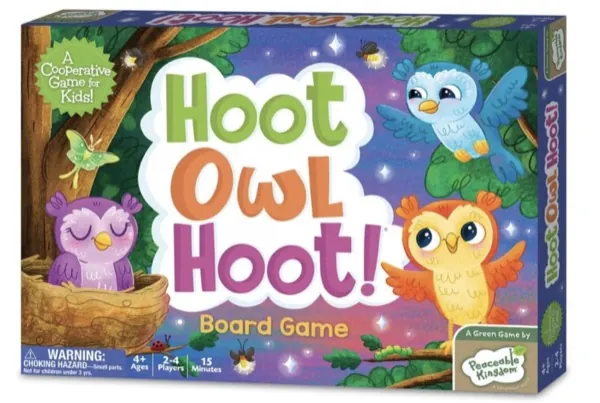
Hoot Owl Hoot (Peaceable Kingdom)
- Best for
- Cooperative colour-matching for younger children
- Why we chose it
- Everyone wins or loses together, so there's no moment where one child beats another.
- Try saying
- “What helped us get all the owls home in time?”
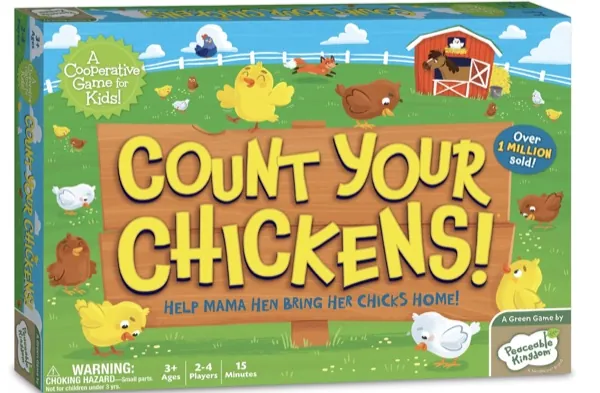
Count Your Chickens (Peaceable Kingdom)
- Best for
- Very young children practising a shared goal
- Why we chose it
- A gentle, early cooperative game for children who aren't ready for competitive play yet.
- Try saying
- “What could we try next time to help all the chicks get home?”
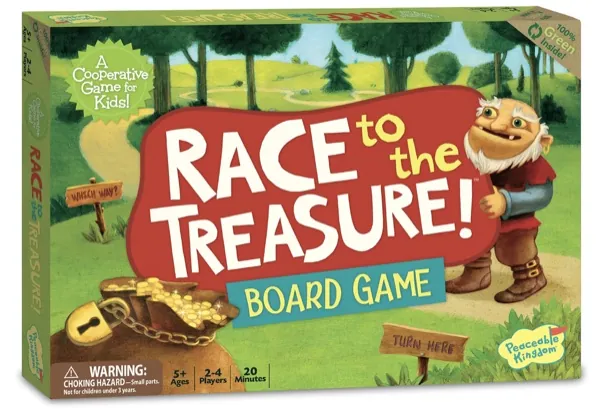
Race to the Treasure! (Peaceable Kingdom)
- Best for
- Slightly older children who want more strategy in cooperative play
- Why we chose it
- Adds path-building and light strategy on top of a fully cooperative structure.
- Try saying
- “What did we decide together to stay ahead of the ogre?”
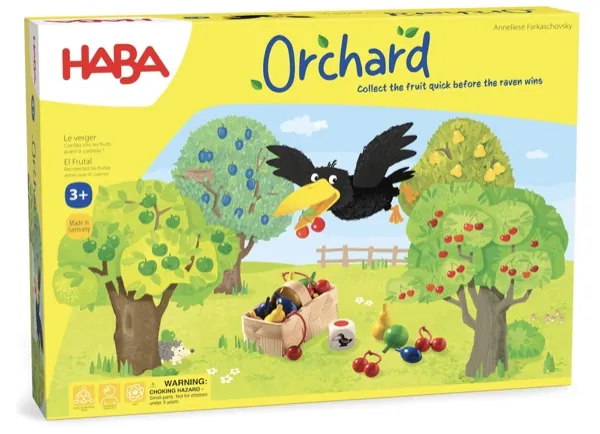
HABA Orchard (HABA)
- Best for
- The youngest children, or a very short first game
- Why we chose it
- Wooden pieces, extremely simple rules, and a genuinely shared outcome, everyone races the raven together.
- Try saying
- “Did we get the fruit picked before the raven arrived?”
Patience when the tower falls
Stacking and balancing games where something always tumbles in the end. Good practice for a deep breath and starting again.
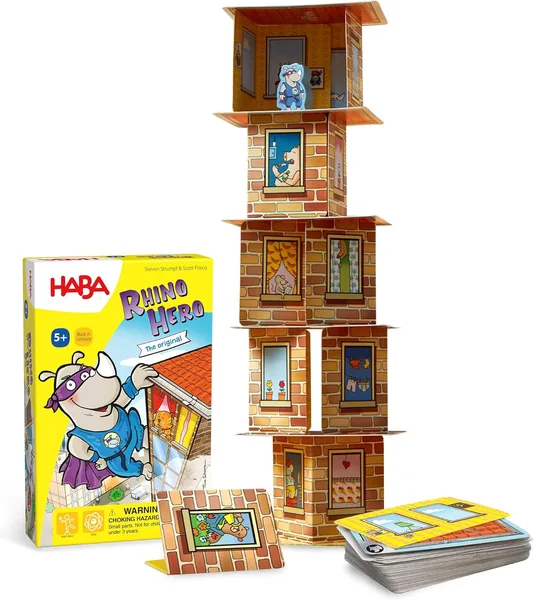
Rhino Hero (HABA)
- Best for
- Staying calm when a wobbly tower falls
- Why we chose it
- Players build a card skyscraper while Rhino Hero climbs it, and sooner or later it falls. Short rounds make it a gentle way to practise a deep breath and starting again.
- Try saying
- “It fell down! Shall we build it again?”
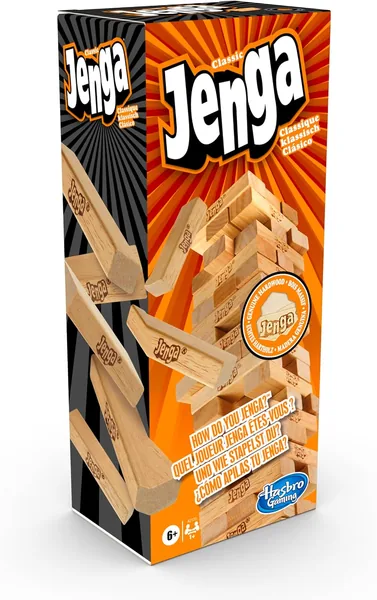
Jenga (Hasbro Gaming)
- Best for
- Careful hands, and laughing when the tower falls
- Why we chose it
- Take a block, place it on top and try not to topple the tower. Everyone's tower falls eventually, which makes it great practice for losing without a meltdown.
- Try saying
- “Everybody's tower falls sometimes. What shall we do next time?”
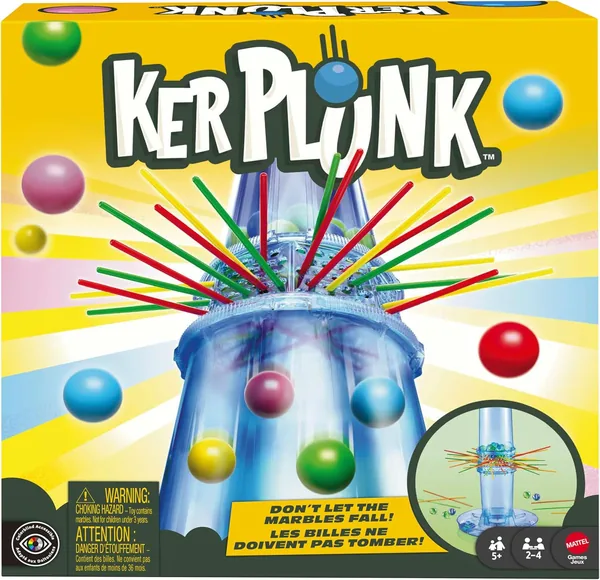
KerPlunk (Mattel)
- Best for
- Patience, turn-taking and suspense
- Why we chose it
- Players pull sticks out one at a time and try not to let the marbles drop. Slow, careful turns and plenty of suspense make it good for practising patience.
- Try saying
- “Let's take a breath before we choose a stick.”
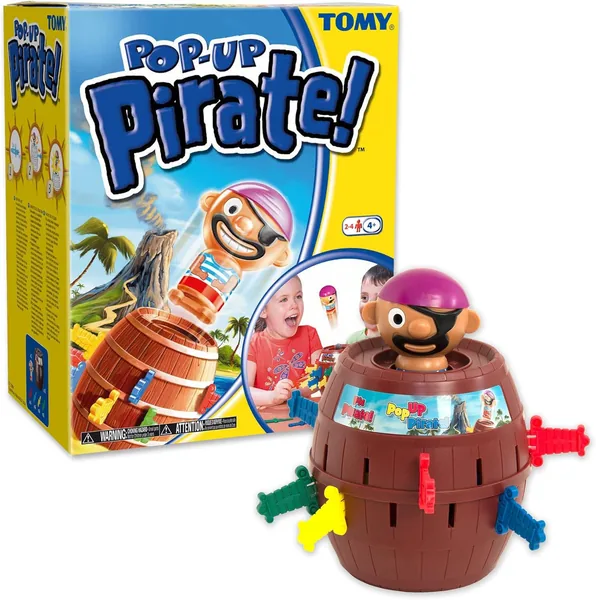
Pop Up Pirate (TOMY)
- Best for
- Taking turns, and handling a surprise
- Why we chose it
- Take turns pushing swords into the barrel until the pirate pops out. It's pure luck, so nobody is to blame when they lose, which makes it a gentle first game about winning and losing.
- Try saying
- “It's just luck! Who wants another go?”
Taking turns, and winning or losing kindly
Quick, simple games with lots of rounds, so there are plenty of chances to practise being a good sport.
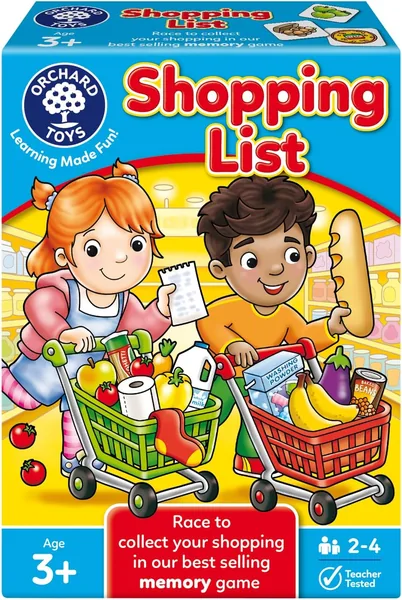
Shopping List (Orchard Toys)
- Best for
- First turn-taking and matching for little ones
- Why we chose it
- Each player fills their trolley by turning over cards to match their shopping list. Simple rules and short games make it a calm first board game for taking turns.
- Try saying
- “Is it my turn or yours?”
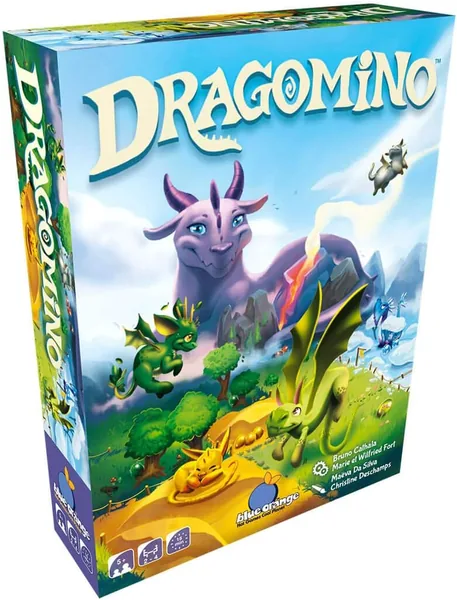
Dragomino (Blue Orange)
- Best for
- Simple strategy and making choices
- Why we chose it
- Players lay domino tiles to build a land and discover baby dragons. Every turn is a small decision, and it won Germany's Children's Game of the Year in 2021.
- Try saying
- “Where shall I put my tile, and why?”
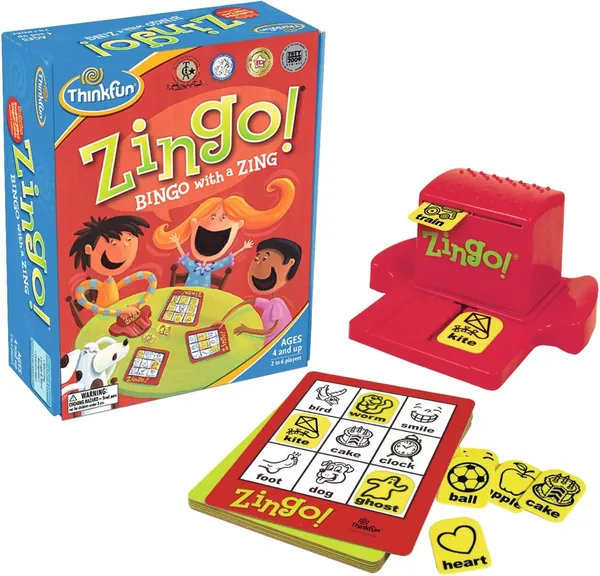
Zingo! (ThinkFun)
- Best for
- Quick matching rounds, and winning or losing gracefully
- Why we chose it
- A bingo-style game where tiles slide out of the Zinger and players race to match pictures and words. Quick rounds mean lots of chances to practise winning and losing kindly.
- Try saying
- “Good game! Shall we play best of three?”
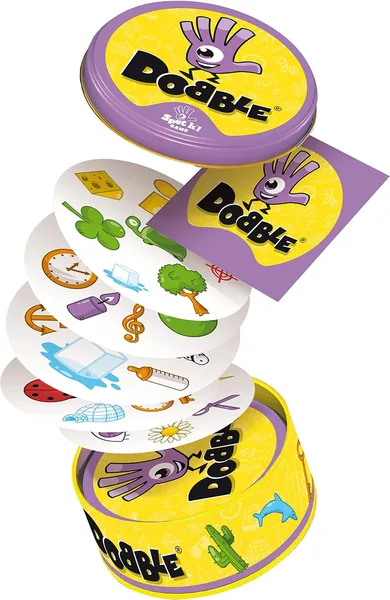
Dobble (Asmodee)
- Best for
- Quick thinking, and laughing off a lost round
- Why we chose it
- Every pair of cards has exactly one matching symbol, and the first to spot it wins the card. Games are fast and silly, so losing a round doesn't sting for long.
- Try saying
- “You were so quick! Let's have another round.”
Talking, asking and everyday skills
Games that practise asking clear questions, listening, and handling money in a pretend shop.
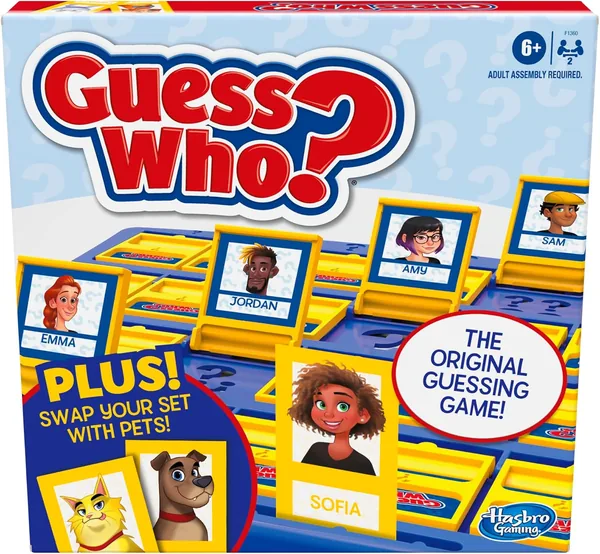
Guess Who? (Hasbro Gaming)
- Best for
- Asking good questions and listening to the answers
- Why we chose it
- Players ask yes-or-no questions to work out the other person's mystery character. It practises clear questions, careful listening and thinking before you guess.
- Try saying
- “What question could rule out the most people?”
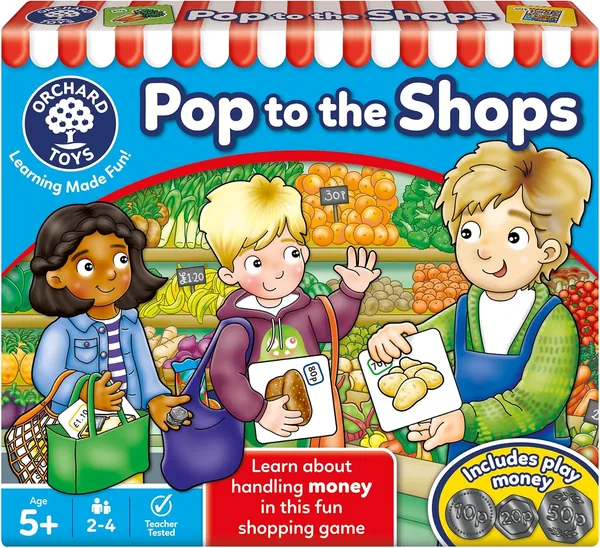
Pop to the Shops (Orchard Toys)
- Best for
- Counting money and taking turns in a pretend shop
- Why we chose it
- Players move around a high street buying things with play money and giving change. A playful way to practise money and maths, and taking turns as a shopper and shopkeeper.
- Try saying
- “How much change should I get?”
Looking for books instead? See our picture book guides →
Ages are a guide, not a rule. As an Amazon Associate, Growing Wise earns from qualifying purchases.