How to talk to children about disability without pity or intrusive questions
Your child points at a wheelchair, a limb difference or a hearing aid in the supermarket and asks, loudly, "What happened to him?"
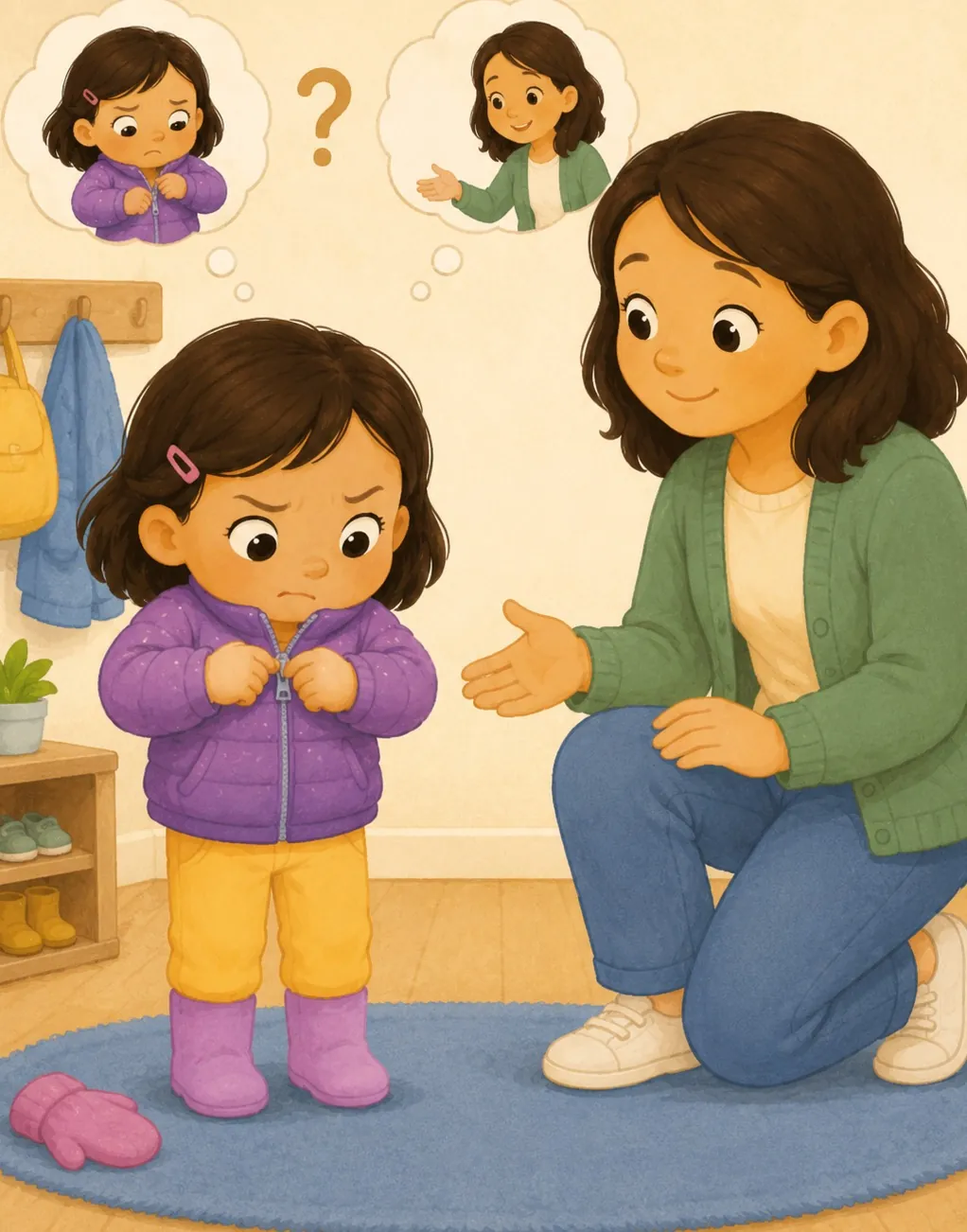
Noticing a difference isn't rude; it's normal. What matters is what happens next. You don't need to panic, shush your child, or apologise to the stranger on your child's behalf. And the disabled person your child just pointed at doesn't owe anyone an explanation of their body, on the spot, in a supermarket queue.
Why this moment feels so awkward
Most of the awkwardness in this moment belongs to the parent, not the child. Your child asked a direct, curious question. You're the one worried about being seen as rude.
That worry often produces exactly the reaction that makes things harder: a sharp "shh", a rushed apology, or pulling your child away mid-sentence. To your child, all of that can land as "asking about that was bad", which teaches avoidance, not respect.
What to say in the moment
- Answer plainly, without whispering: "Some people's legs work differently, so they use a wheelchair to get around."
- Don't speak on the disabled person's behalf, or invite them to explain themselves to a stranger's child.
- If your child asks the person directly, it's fine, but you don't owe an apology for it. A simple "sorry, she's curious" is warmer than a mortified one.
Try saying: "Her legs work differently to yours, so she uses a wheelchair to get around, the same way you use your legs to walk."
Mobility aids are tools, not tragedies
A wheelchair, a cane, a hearing aid or a communication device is a tool that helps someone do things, in the same way glasses help someone see. None of them are something to react to with a sad face or a lowered voice.
It's also worth noticing when praise tips into treating ordinary activity as extraordinary. A disabled child playing, laughing or scoring a goal doesn't need to be told they're "so brave" or "such an inspiration" for doing what any child does.
Curiosity doesn't require an explanation
A disabled person, adult or child, doesn't owe a stranger's family a medical history. It's completely fine for the answer to a question to be "I'm not sure, that's their business, not ours"; that's still an honest, respectful response.
Try saying: "That's their own story to tell if they want to. What we do know is that everyone gets to join in."
Move the conversation towards actual interaction
The most useful thing a young child can take from these moments isn't a fact about a diagnosis. It's a habit: noticing what someone might need to join in, and asking rather than assuming.
When things are calm, ask: "If a friend used a wheelchair and wanted to play tag with you, what could you both do to make that work?"
Let your child answer first. The aim isn't one correct answer, it's practising the idea that a game can usually be adjusted so everyone joins in.
Try the Growing Wise 5-minute activity
Books that can help
See What Happened to You? and You're SO Amazing! for a child's-eye view of exactly this situation, We Move Together for a wider look at accessibility, and Just Ask! for talking about difference in general.
Sources & further reading
By the Growing Wise team · Last reviewed: 5 September 2026
Growing Wise offers educational ideas for parents and carers. It is not a substitute for professional medical, developmental or mental-health advice.