Calm to furious in seconds?
The tower falls, the game is lost, the wrong cup comes out, and suddenly there’s shouting. If that’s your evenings right now, you’re not doing anything wrong. This is what big feelings look like at 4 to 8.
When a big feeling starts, a young child’s body is in charge, not their thinking. So calm the body first and talk later. Then, at a calm moment, practise naming feelings and choosing what to try, so the next explosion has somewhere to go.
In the moment
Keep your words short and your voice low. Don’t explain, reason or ask why yet.
“You’re really upset. Let’s get your body calm first. I’m here.”
A 10-second trick: push the wall
Put both hands flat on a wall and push as hard as you can for 10 seconds, then let go and shake your hands out. Do it together the first few times. It gives the angry energy somewhere to go, and it’s a little bit silly, which helps.
The 5-minute routine to practise while calm
- Name it“Was that angry, sad or frustrated?” A word for the feeling makes it smaller.
- Notice it“Where did you feel it? Hot face? Tight hands?” Children spot it sooner next time.
- Choose what to tryPick one calm-down idea now, while calm, so it’s ready for the next big moment.
Five minutes a day, at a quiet time, works better than a long talk straight after an explosion.
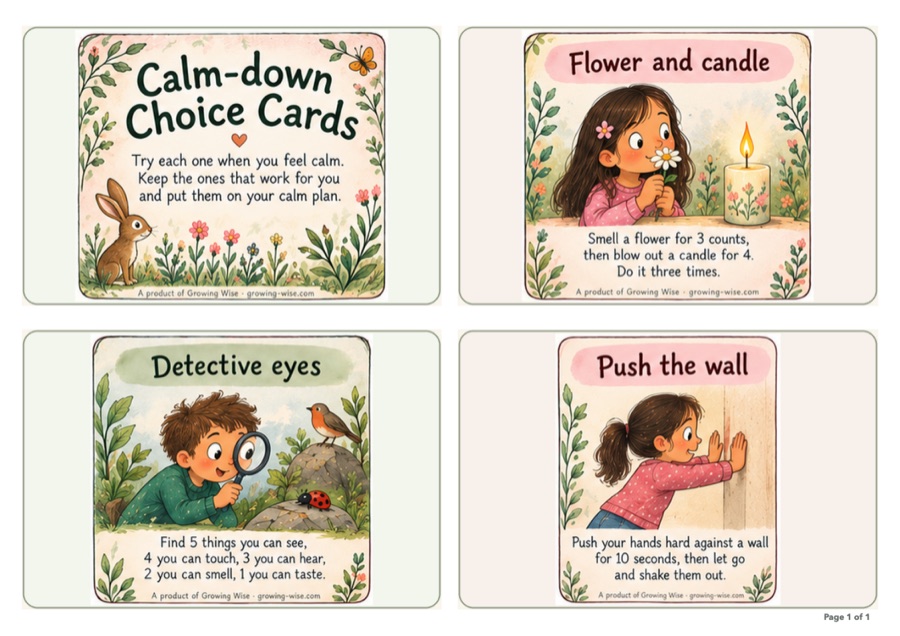 FreeStart with the free calm-down cards11 illustrated calm-down ideas, push the wall included. Print them today and pick two together.
The whole routine, ready to print
The free cards help in the moment. The Big Feelings Toolkit is the routine that helps over time: everything for naming, noticing and choosing, plus what to say yourself.
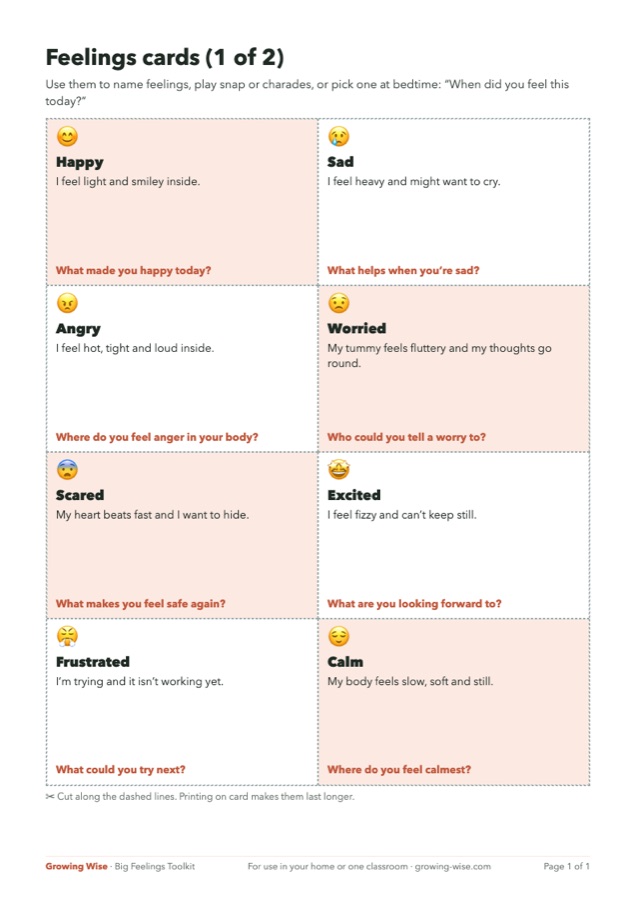
- 16 feelings cards and a feelings thermometer
- A “where do I feel it?” body map
- 11 illustrated calm-down cards and a calm plan your child makes
- 12 “what would you feel?” scenario cards to practise while calm
- A week of feelings check-ins and a certificate for practising
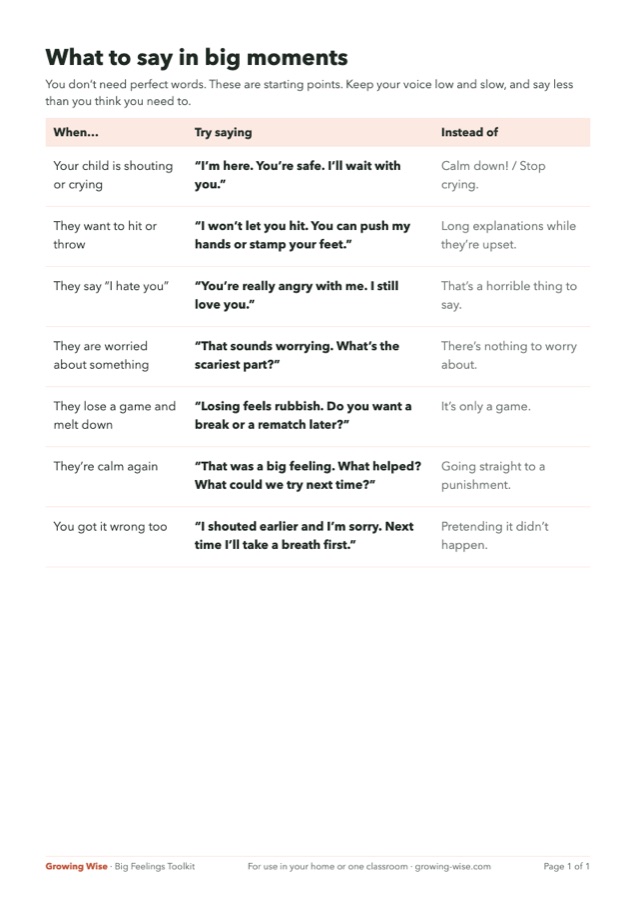
- A grown-up guide: what to do before, during and after, and what to say in big moments
£5.99 15-page printable PDF · instant download
Get the Big Feelings Toolkit Full details and FAQs
Pay securely with PayPal or a card. Your download appears straight after paying. Growing Wise is made by a very small team of educators and a software engineer, not a big company.
Is this normal?
Yes. Children aged 4 to 8 feel things as strongly as adults but have had far less practice at handling them. If outbursts are very frequent, getting more intense, or you’re worried about safety, talk to your GP or health visitor: the routine above is everyday practice, not a replacement for support.